8 weeks
Bootcamp Project
Sole Designer
Figma, Maze, Mirro
01
Problem
Most service marketplaces solve one side of the problem. Homelink solves both. Landlords are routinely overcharged for basic maintenance by property managers who mark up labor and operate with little transparency. Meanwhile, tenants are left in the dark, unsure if their request was even received. Homelink cuts out the middleman entirely, giving landlords direct access to vetted service providers and giving tenants real-time visibility into every step of the repair process.
The Solution
My app skips the middleman by having the landlord handle maintenance requests directly. When a tenant submits a request, the landlord receives it immediately and has two options:
Fix the issue themsevles
Hire from a curated list of service providers
Research
I used a digital ethnographic research approach due to limited access to landlords who currently or recently worked with property management companies. To gather relevant insights, I analyzed discussions across online forums and communities that aligned with my research criteria.
“Tenant texts PM about a clogged kitchen sink. PM texts a plumber. PM charges owner or tenant for the plumber, and adds a $50 charge for the PM”
“The management fee is a red herring. The problem is when smoke detectors need new batteries and they charge you $50 for the labor. Also most of them charge for placing tenants.”
“This was a house we had just rehabbed and the PMs husband had a handyman business. Lo and behold, this home magically needed $300 of repairs EVERY month for the first 4 months, until my husband took over the maintenance."
“My issue with property management companies is that they generally don't do a great job of go screening tenants, staying on top of maintenance, keeping tenants happy, and keeping the property in good condition.”
“ It's pretty common for property managers to have poor responsiveness both to tenants and to landlords, and let important steps slide until it results in a catastrophe for the landlord.”
Key Insights
Landlords felt disconnected from issues arising with their properties
Unexpected charges for basic maintenance tasks
Property managers made decisions without landlord input
Define
POV & HMW Statements
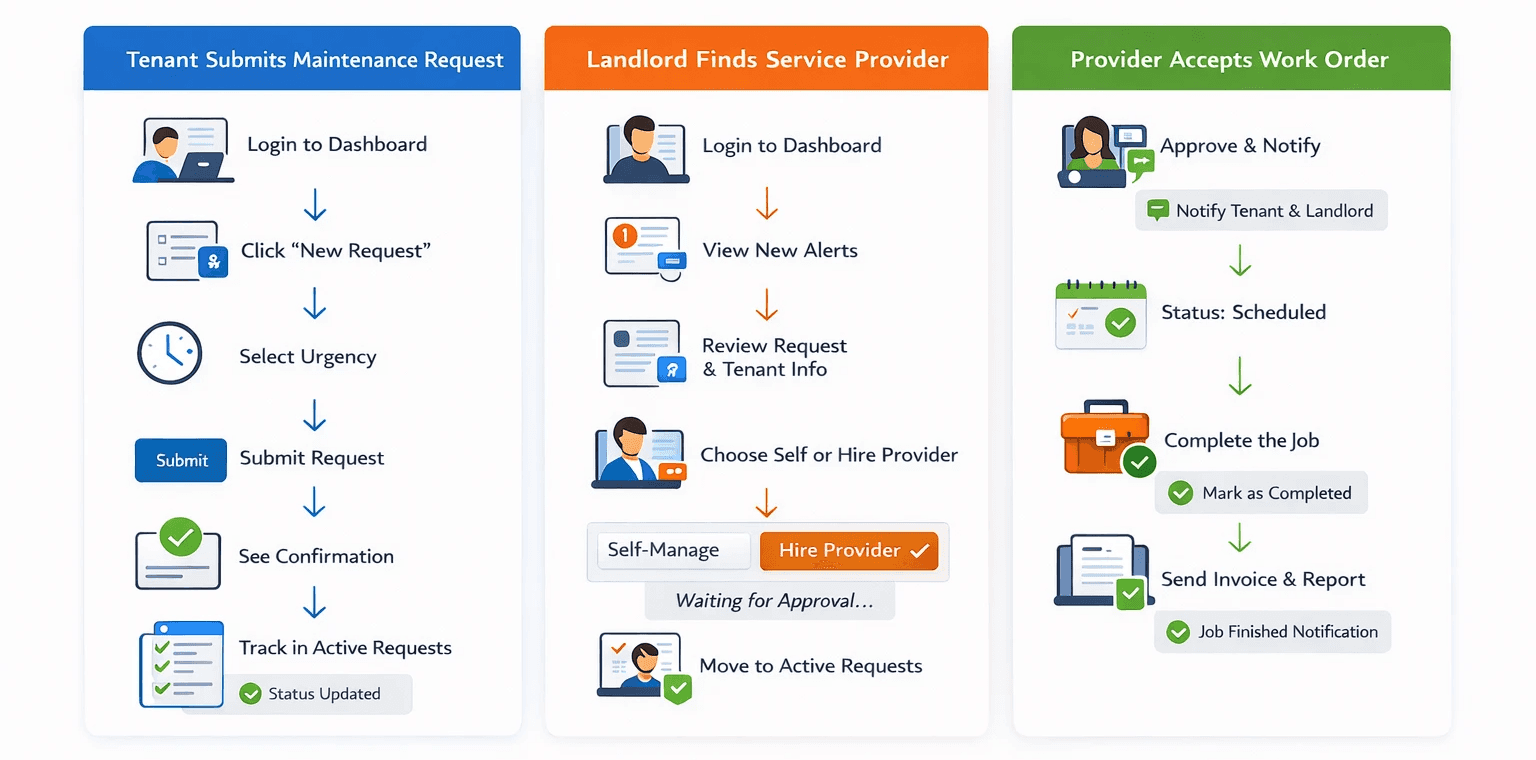
After brainstorming solutions, it was important to identify and prioritize the key features that would bring the most value to both landlords and tenants. Creating user flows for each user type helped me map out how they would move through the app and complete essential tasks, which in turn prepared me for the design phase.
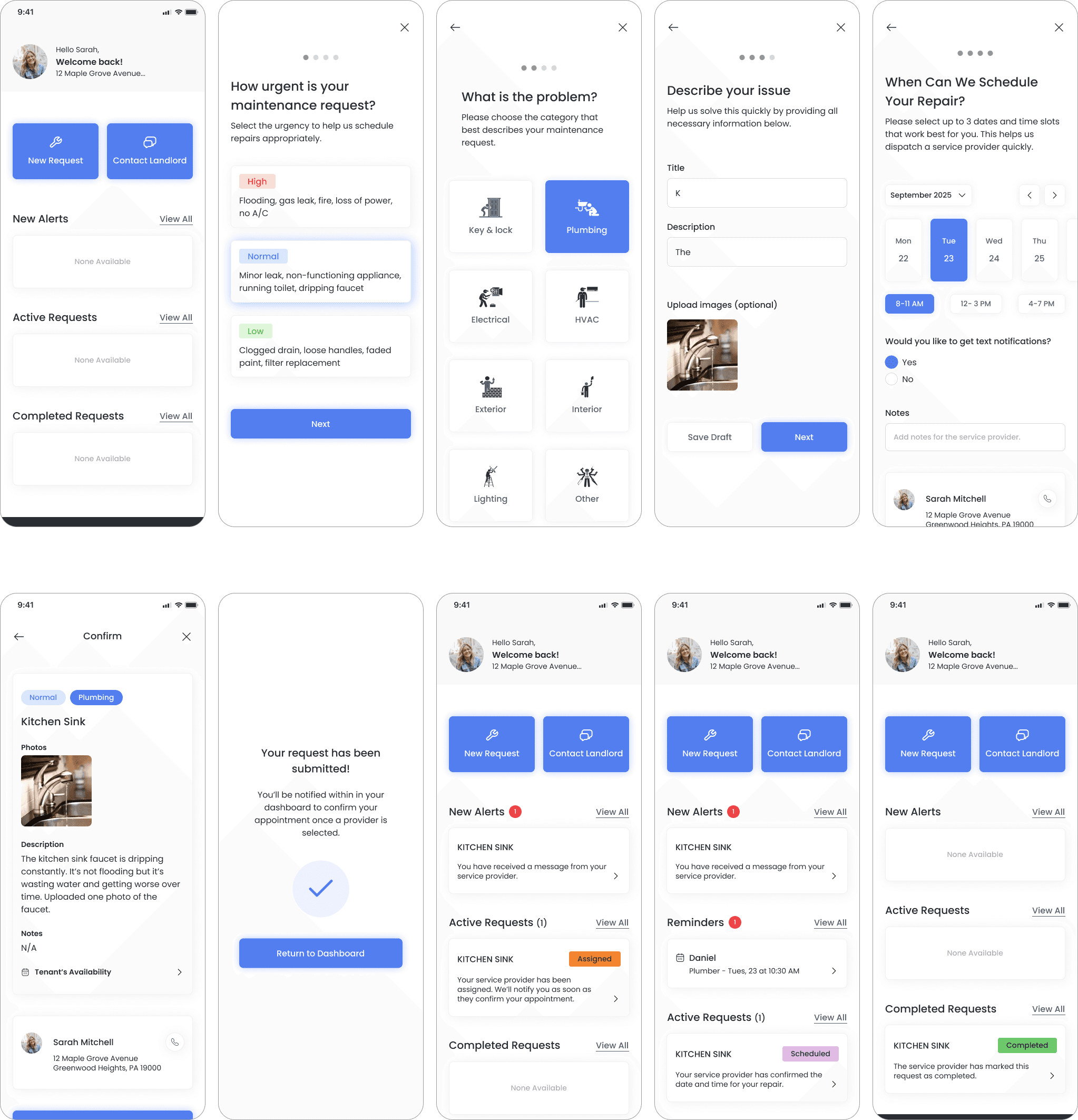
Tenants can submit maintenance requests through their portal with key details and optional photos, giving landlords clear insight into the issue from the start.
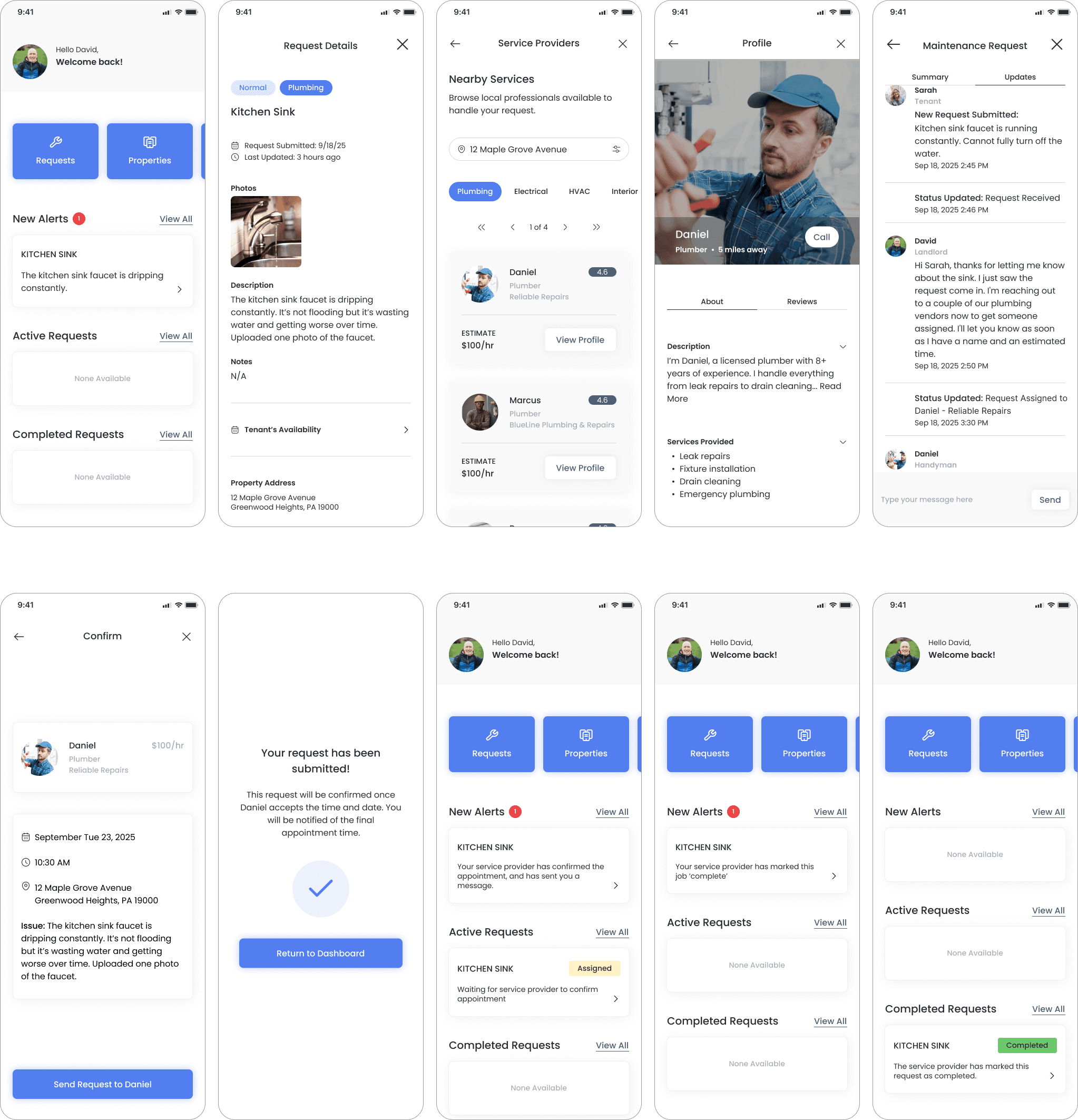
Landlords can quickly compare and select trusted local handymen using transparent rates, verified ratings, and concise profiles.
Both landlords and tenants receive real-time notifications throughout the maintenance request process, ensuring clear communication and reducing confusion at every stage.
Landlords, tenants, and handymen can communicate directly through in-app messaging, ensuring clear and efficient communication for all parties.
Brand Identity
A clean, modern visual system designed to feel familiar, trustworthy, and easy to use within the real estate space.
/ Logo
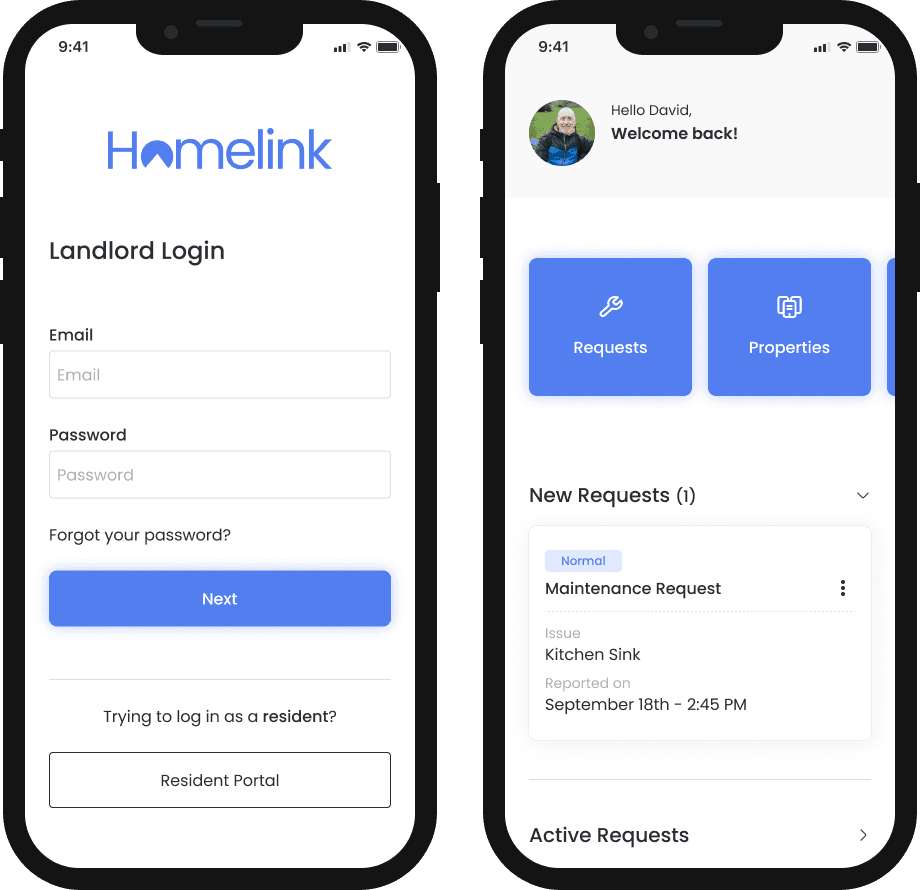
For the HomeLink logo, I wanted to keep the design simple while still tying it to real estate. To do that, I incorporated a subtle roof shape inside the “O” to represent a home and reinforce the brand’s connection to housing.
/ Colors
For the color palette, I chose white as the primary background with light grays for borders and inactive links to keep the interface clean, minimal, and easy to navigate.
To reinforce HomeLink’s connection to real estate, I used blue as the accent color because it communicates trust, professionalism, and clear communication, aligning with HomeLink’s goal of keeping landlords informed throughout the maintenance process.
Primary background
#FFFFFF
Primary accent
#537EEF
Borders & dividers
#D6D7D7
Secondary accent
#4F5D75
Secondary background
#000726
/ Typography
I chose Poppins for its clean, modern style and strong readability across all devices. Its simple geometry helps HomeLink feel approachable, professional, and easy to navigate.
Design
Wireframing Process
I created digital wireframes in Figma to visualize the app’s structure and to quickly share designs for feedback to iterate and refine the user experience.
Testing
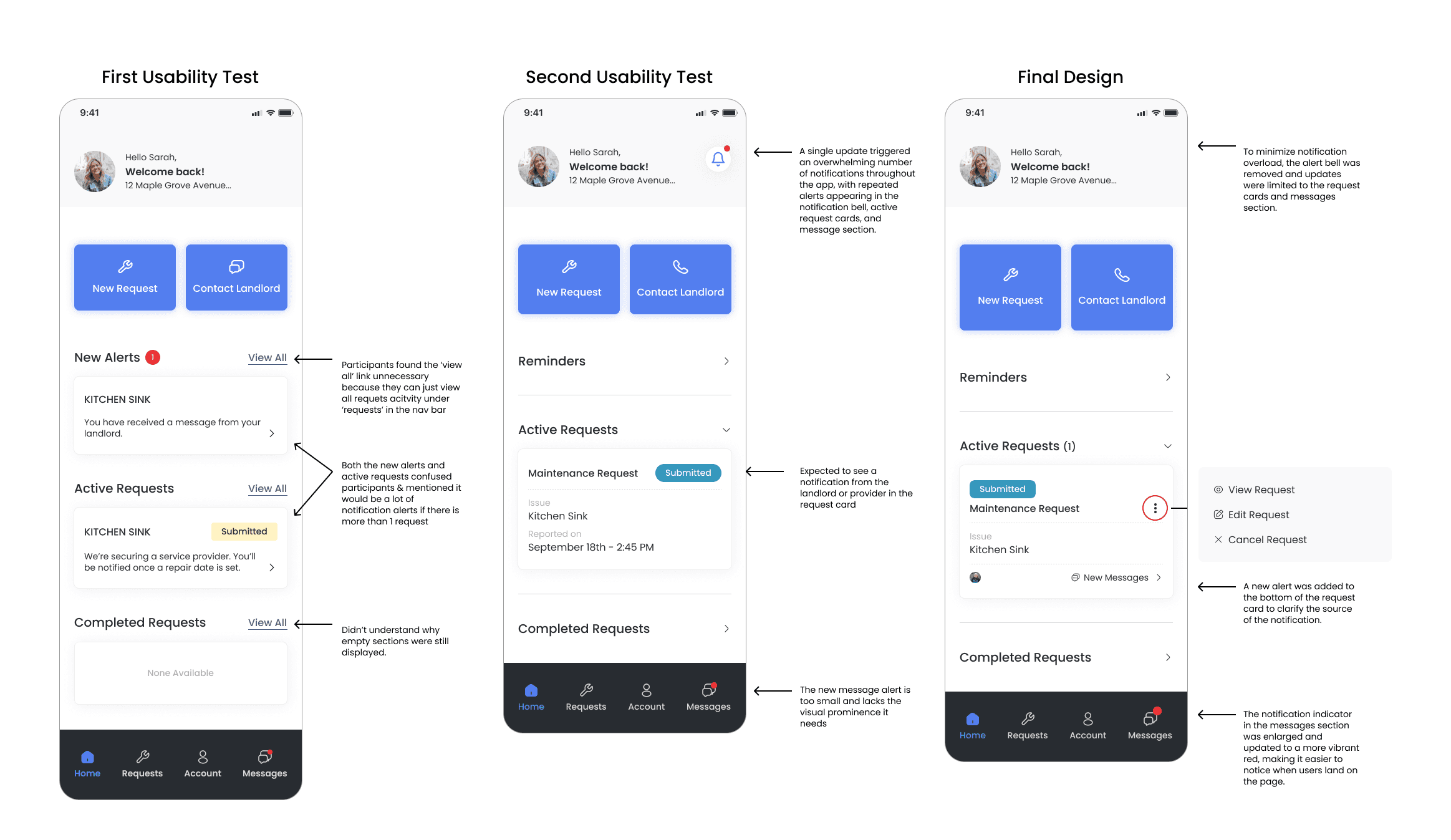
Based on the usability tests I conducted, the biggest challenge for users was understanding how notifications worked, specifically when updates came from the landlord or service provider. To address this, I refined the final dashboard in several ways:
Introduced accordions so sections without notifications remain collapsed, reducing visual clutter and preventing the dashboard from feeling overwhelming.
Made the message alert indicator more prominent in the navigation bar, since users often overlooked it.
Added a three-dot menu on each request card to give users clear access to actions like view, edit, and cancel.
Included a dedicated notification area on each request card, making it clear when an update is tied to a specific request rather than a general message from the message center.
Final Design
Based on insights from usability testing, I implemented key changes to create a more seamless user flow for tracking a maintenance request from submission through completion. The two videos below showcase the final interactive prototypes, highlighting both the tenant and landlord flows.
Project Reflection
Reflecting on challenges, what I learned, and future opportunities.
Challenges Faced
The most challenging aspect of the HomeLink project was clearly communicating real-time updates during usability testing. Early testing rounds revealed significant user confusion, but incorporating participant feedback allowed me to refine the flow and ultimately create a more seamless, intuitive experience.
What I Learned
Designing for two user types (tenant + landlord) taught me how important it is to keep system status updates clear, reduce cognitive load, and prioritize communication in time-sensitive workflows.
What My Next Steps Would Be
Allowing the service provider to upload photos once the job is complete for visual confirmation.
A curated list of providers offering long-term contracts, allowing landlords to avoid the hassle of sourcing a new provider for each request.